Overview perspective shift
How to Change Your MindOverview perspective shift names a change in vantage: instead of being absorbed in the ego, a person can see it as something separate, contingent, and potentially dispensable. In the account here, that distance is not simply an abstract idea. It takes the form of a steel structure suspended over a landscape, making the self seem visible from outside and suggesting that the world beneath it does not depend on the ego’s presence.
Ego dissolution and significance
Michael Pollan presents ego dissolution as the most important and therapeutic of the phenomenological effects people report on psychedelics. Researchers use different vocabularies—spiritual, humanistic, psychoanalytic, or neurological—but, in his synthesis, these accounts point toward the loss of ego or self as a central psychological driver. He connects that loss to mystical experience, the death rehearsal process, the overview effect, mental reboot, new meaning, and awe.
The sense of transcendence, sacredness, unity, infinitude, and bliss associated with mystical experience may, in this account, arise when the boundary between self and world falls away. The mind then tries to explain an experience that exceeds its ordinary categories. Its interpretations may become supernatural or spiritual not because the experience supplies a settled explanation, but because the mind is struggling to make meaning under conditions it cannot readily assimilate.
The steel frame above the landscape
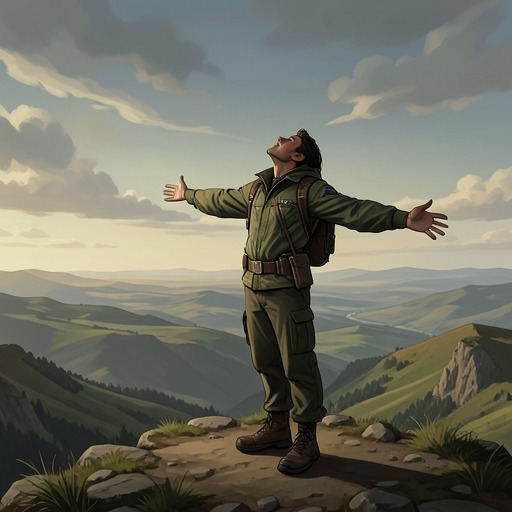
During a meditation experiment with Judson Brewer, Pollan first completed a loving-kindness exercise, directing charitable thoughts toward himself, people close to him, and humanity at large. In a later run, he asked to try an exercise without telling Brewer what it would be. With his eyes closed, he summoned memories of psychedelic journeys. The first image was a pastoral landscape of fields, forest, and pond, with a large, hollow steel frame hovering above it, like an electrical pylon or a childhood construction toy.
Within the image, the frame represented the ego and the landscape the rest of the self. Though imposing, it did not feel chiefly menacing. It appeared empty and superfluous, no longer anchored to the ground beneath it. The scene became an overview perspective shift: the ego could be regarded as a sturdy but vacant structure, while the landscape remained. The phrase child’s play recurred in Pollan’s mind; the frame seemed like a toy that could be assembled or dismantled. In recollection, he could imagine it floating away with its shadow, leaving the landscape to be.
Detachment as a discovered possibility
The image gave form to a possibility Pollan says he would not have considered before psychedelics: detaching from the ego, at least imaginatively. The scene’s force lies in its reversal of an ordinary assumption. The frame appears to dominate the landscape, but its apparent centrality proves unnecessary; the landscape is not destroyed when the structure leaves. Pollan interprets the episode as suggesting that identity exceeds the ego rather than depending on it.
This perspective also links meditation with psychedelic experience. Pollan proposes that the lesson of both is that a person is not identical with the ego and that more remains when it recedes. The image does not establish that the ego has literally vanished or that the landscape represents a complete account of the self. Instead, it makes separation imaginable: the ego can be seen, assessed, and allowed to drift away.
What the experiment can and cannot show
When the meditation run ended, the measured bars had dropped far below baseline. Brewer was surprised by the result and became interested in whether merely recalling a psychedelic experience could reproduce something that happens in the brain during the experience itself. Pollan considers a second possibility: perhaps the decisive factor was the image’s particular content, especially the act of bidding farewell to the ego. The episode therefore offers a striking personal example, not a settled neurological explanation.
Pollan places that uncertainty within the limits of the research. The bars provide clues, but the mechanisms of altered consciousness remain poorly understood; Brewer’s hypotheses lead to further experiments rather than a definitive answer. The image nevertheless gives the overview perspective shift a memorable shape: an ego rendered as a hollow, floating frame, and a mind able to picture the world continuing without it.